Why Dental X-Rays Matter for Safer Pet Tooth Extractions
/
Why Dental X-Rays Are Vital for Veterinary Extractions
When a pet needs a tooth removed, you want a clear plan, fewer surprises, and a confident path to healing. Intraoral radiographs are the guide that make extractions safer and outcomes better.
The Problem: Hidden Disease, High Stakes
Teeth are extracted to resolve periodontal disease, bone loss, gingivitis, broken or retained roots, supernumerary teeth, and conditions like stomatitis. Extractions also occur in pets with otherwise healthy teeth when anatomy—such as malocclusion or crowding—causes damage to surrounding structures.
Without imaging, curved roots, retained fragments, or collateral injury can be missed—raising the risk of pain, infection, or complications.
The Guide: Intraoral X-Rays Before and After
Before the extraction
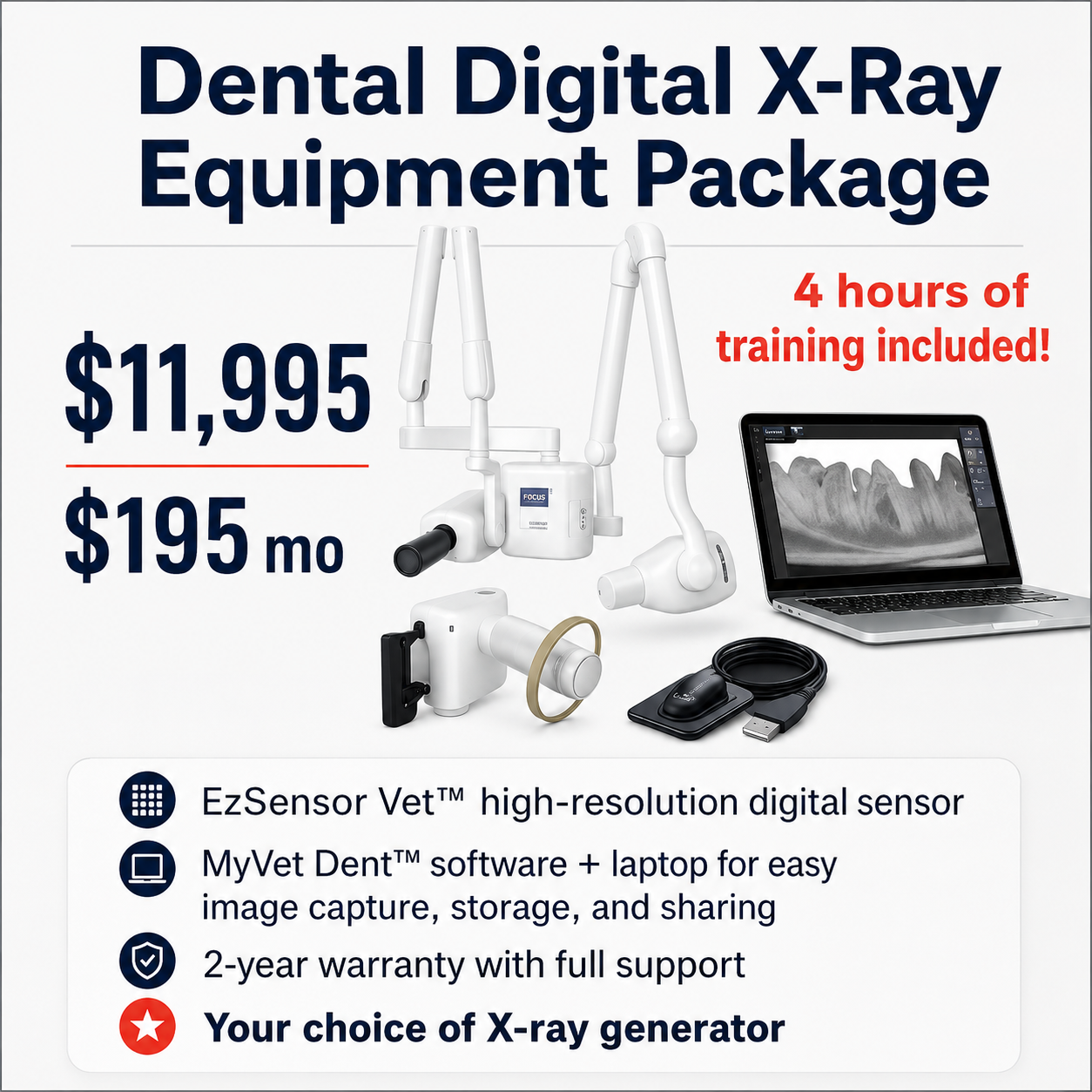
Start every dental with radiographs. They reveal root shape, pathology, and nearby structures so you can select the right technique and instruments.
After the extraction
Post-extraction films confirm the tooth is fully removed, no root or bone fragments remain, and surrounding teeth and tissues are intact.
Your Three-Step Plan
- Diagnose with radiographs. Capture intraoral X-rays first. Map root curvature and identify pathology to reduce surprises.
- Extract with precision. Use appropriate instruments, controlled elevation, and surgical flaps when needed. Suture the site to protect healing.
- Verify and protect healing. Take post-extraction films, curette the socket, close the flap, and set follow-up for comfort and recovery.
When Extractions Are Needed
Extractions occur at any age in dogs and cats. They remove diseased, infected, or fractured teeth; retained roots; and supernumerary teeth. Sometimes extractions are performed to correct anatomical problems that harm adjacent structures.
Remember: removing the tooth is only part of treatment. Eliminating disease in the alveolus and bone and closing the surgical site are essential to healing.
Surgical vs. Nonsurgical Extractions
Nonsurgical: Often used in severe gingivitis or advanced periodontal disease when teeth are mobile. Drilling may not be required, but the site still needs closure to prevent infection and pain.
Surgical: Required for fractured roots or complex anatomy. Create a flap, expose roots with a high-speed drill, section multirooted teeth, and remove roots carefully. Clean the socket and close the flap to protect healing.
Minimizing Complications
Complications can include tooth fracture, oronasal fistula, salivary duct injury, eye injury, misplacement of root fragments into the sinus or mandibular canal, traumatic bleeding, and jaw fractures. Licensed veterinarians skilled in dental and craniofacial anatomy—and who use radiographs—reduce these risks.
- Use sharp, sanitized instruments; dull tools can damage bone.
- Elevate with gentle, sustained torque around the root perimeter.
- Keep your fingertip near the elevator tip to protect nearby tissues.
- Section multirooted teeth with the correct bur to limit collateral trauma.
- Handle gingival flaps with care; they are critical for closure and comfort.
How Dental X-Rays Help with Difficult Extractions
Pre-op films reveal curved or divergent roots, ankylosis, or periapical disease that dictate your approach. Post-op films confirm complete removal and identify any retained fragments or inadvertent injury. Radiographs turn uncertainty into a predictable plan.
Summary: A Safer Path to Healing
Early dental exams paired with intraoral radiographs create a targeted treatment plan, reduce complications, and speed recovery. Extractions should be performed by trained clinicians who always image before and after—and who close with gingival flaps for best healing and comfort.